
Compliance
FTC Native Advertising Guidelines: What Advertisers Need to Know
Native ads have to be clearly disclosed as advertising, even when the whole format is built to blend in. Here's what that actually requires.
The FTC has published specific guidance on native advertising because the format's core mechanic — blending in with editorial content — creates real potential for consumer confusion about what's an ad and what isn't. The rule isn't complicated in principle: native ads have to be clearly and conspicuously disclosed as advertising. The detail is in what "clearly and conspicuously" actually requires.
The core standard
Under FTC guidance, a disclosure has to be understood by a reasonable consumer, in the context and format in which they'll actually see it. That means a disclosure buried in fine print, styled to blend into the background, or placed somewhere a reader has to scroll past the offer to find, generally doesn't meet the standard — even if the word "advertisement" technically appears somewhere on the page.
What adequate disclosure looks like in practice
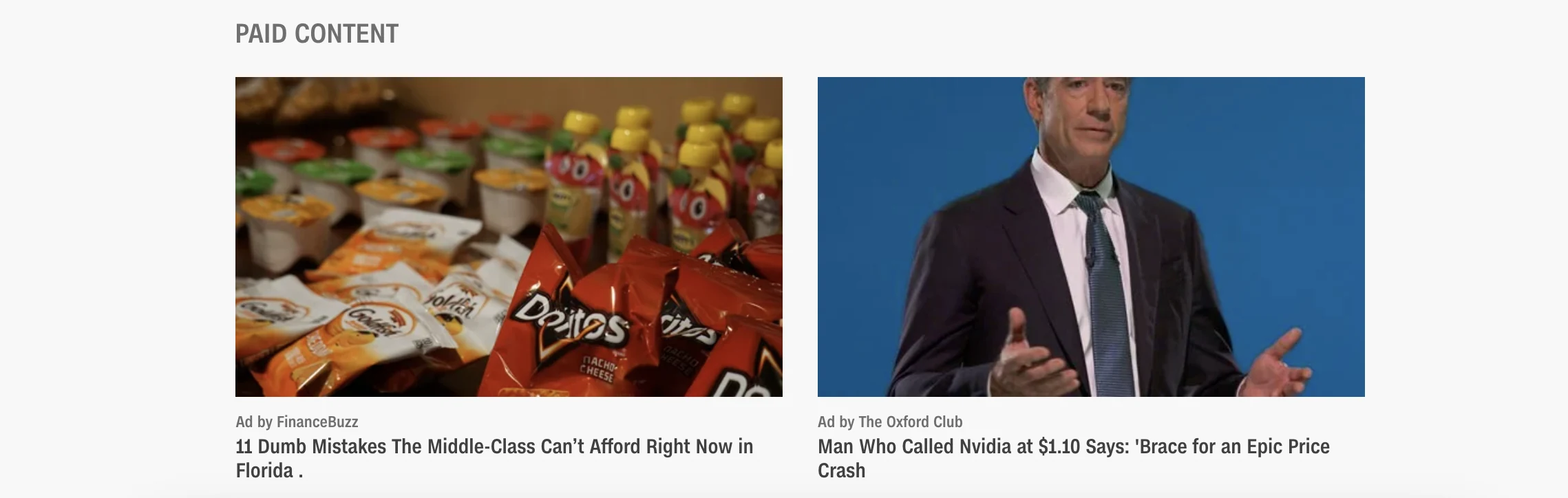
- Placement: disclosure language ("Advertisement," "Sponsored," "Paid Content") appears before the headline or immediately adjacent to it — not buried at the bottom of the page.
- Visual contrast: disclosure text is large enough and contrasts enough with the background to actually be noticed, not styled to disappear into the design.
- Platform-level disclosure isn't enough on its own.The fact that Taboola, Outbrain, or Revcontent label their widgets as "Sponsored Content" or "Around the Web" at the module level doesn't automatically clear the advertiser of disclosure obligations on the individual ad and the landing page itself.
- The advertorial page itself needs disclosure too, not just the ad unit that led there — a common gap, since teams often disclose on the creative but forget the landing page needs the same treatment.
Common violations in native campaigns
The FTC's enforcement history and guidance point to a few recurring problem patterns: headlines written to look like independent news reporting rather than advertising, advertorial pages with no disclosure at all, disclosure language that's technically present but visually camouflaged, and claims made in advertorial copy that wouldn't be allowed in a standard ad but get made anyway because the format feels less regulated. It isn't.
Regulated categories carry extra weight
Health, financial products, and insurance advertorials get more scrutiny than general e-commerce, both from the platforms themselves and from regulators, because the consequences of a misleading claim are higher. Clinical claims, guaranteed outcomes, and pricing claims all need to be substantiated the same way they would in any other ad format — the advertorial wrapper doesn't lower that bar.
Why this matters for performance, not just compliance
Native platforms enforce their own content policies on top of FTC requirements, and non-compliant creative gets rejected or pulled faster than it gets optimized. Building disclosure and substantiated claims into the creative process from day one isn't just about avoiding regulatory risk — it's what keeps a campaign from getting shut down mid-test.
This page is general information based on published FTC guidance, not legal advice. Talk to counsel about your specific campaigns and claims.
Ready to put this to work?
We run native campaigns on Taboola, Outbrain, and Revcontent every day. Let's talk about yours.
Talk to an Expert